
The Luna Mesa Ranch Press catalog of books on cattle — the Dexter herd and the American herd, the working operation and the working history.
The Dexter Books
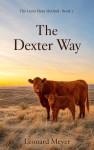
The Dexter Way: Raising Dexter Cattle on the American System
The Dexter is a small-frame, tri-purpose, family-farm cow. She raises her own calf on grass. She gives milk in surplus to what the calf needs. She works under yoke when a man takes the time to train her. She has been doing all of it since long before the cattle industry forgot how. The Dexter Way is the working manual for the small-scale rancher who wants to keep cattle the way cattle are supposed to be kept — beef on the rail, milk in the bucket, calves on the ground, and ground that comes back better for it. Written from a forty-acre operation on the Southern High Plains, with the actual numbers from the actual herd that walks the actual ground.
History of Dexter Cattle: A Tapestry of a Breed
One of the smallest cattle breeds in the world has left behind one of the largest paper trails in livestock history. The Dexter is a cow a family can keep on a few acres — and yet its history runs back through the wild aurochs, the cattle-law of ancient Ireland, the black mountain herds of County Kerry, and two centuries of herd books, breed societies, and scientific papers across three countries. This is a documentary history for breeders, heritage-cattle keepers, and anyone who has ever written a small black cow into a book so she would not be forgotten.
The Polled Dexter: The Godstone Line and a Trait of Contested Origin
On the fifth of May, 1984, a heifer calf was born at the Godstone herd in England. Both her parents stood in the main pedigree of the Dexter Cattle Society — a register that to that date carried no polled animal. The calf was polled. The Society registered her that same year as Godstone Esmeralda.
Where her poll trait came from is a question the breed has not settled. One account holds that it arose as a spontaneous mutation, of the kind cattle genetics has documented at the polled locus in other breeds. The account set against it holds that a second polled calf was born at the same herd six days later, out of an appendix-registered cow whose lineage runs outside the purebred register, and that an undocumented outcross is at least as consistent with what the register actually preserves. Every particular of that second calf reaches this book at second hand, and the book says so where it uses them.
The book lays out the case. It does not settle it.
The Dexter Genome: Breeding the Small Herd on a Closed Book
The Dexter carries two lethal conditions that a laboratory will test for from a hair sample for the price of a bag of feed. One was solved: chondrodysplasia has published variants and a test that works. The other, pulmonary hypoplasia with anasarca, has a test, and no publication of its variant has been found. The larger gap lies elsewhere.
The Dexter Genome reads the breed’s registries at their governing instruments rather than their web pages: the standard operating procedures, the constitutions, the breeding programs approved under animal-breeding law. It reports what those documents establish, what they leave undefined, and where a pedigree stops meaning what a breeder assumes it means. Its organizing finding is that a herd book is not a record of what was found in a population. It is a record of what was submitted to it and retained.
From that follow the harder subjects: an effective population size, estimated from the breed’s pedigrees or from a sample drawn to measure it, that has not been found in print; five foreign registries whose entry standards the American register depends on and does not write; traits that are tested and sold and are not defects; and the breeding decisions a small herd has to make anyway, built to hold while those gaps stay open.
Written for breeders who already own the animals.
The American Cattle Books
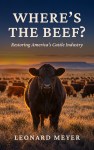
Where’s the Beef?: Restoring America’s Cattle Industry
The American cattle herd is the smallest it has been since 1951, and the industry that raises, finishes, and processes it is more concentrated, more fragile, and more dependent on foreign ownership than at any point in its history. In Where’s the Beef?, rancher Leonard Meyer — fifty-three years inside the beef chain, twenty-eight of them in the operational infrastructure of the nation’s largest packing plants — takes the full measure of what has gone wrong. Organized around four convergent threats to American cattle — biological, ecological, economic, and demographic — the book diagnoses an industry losing sovereignty over its own land, water, inputs, equipment, data, credit, and kill floors. Drawing on the American System political-economy tradition of Hamilton, Clay, Lincoln, and Carey, Meyer argues that the restoration of the cattle industry is inseparable from the restoration of the republic that depends on it.
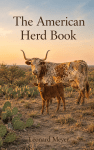
The American Herd Book: A History of the Breeds That Made a Country
The American herd walked in ahead of the settler, ahead of the railroad, ahead of the fence. From the Spanish criollo cattle that carried the frontier from Florida to Montana, through the British breeds that fed the industrial working class, to the dairy herd that held the family farm and the American-made composites a generation of cattlemen built from scratch — the story of American cattle is the story of the country that ate them, worked them, and sometimes preserved them. Seven movements: the Spanish arrival, the British improvement, the dairy establishment, the American-made breeds, the Continental invasion, the consolidation under the Angus monoculture, and the restorationist recovery at small-operator scale. Not a reference encyclopedia. Not a coffee-table tribute. A working history of the animals that built America.

