
Luna Mesa Ranch Press has published eleven books, all available on Amazon. The books on this page cover American sovereignty and the American System, working-ranch practice, and the covenant life. The cattle books have their own page.
American Sovereignty Trilogy

Outside the Gates: The City of London and the American Republic
The war did not begin in 1776. It began in Venice — six hundred and fifty years of financial empire that migrated from Venice to Amsterdam to London, built the Bank of England, and built the Federal Reserve. Hamilton understood it. Lincoln understood it. McKinley understood it. Each was removed at the moment of maximum threat.
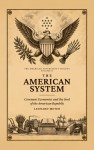
The American System: Covenant Economics and the Soul of the American Republic
The American System did not begin with Hamilton. It began in the act of creation itself — in the nature of a God who works, who made man in His image to work, and who wired into human nature a directive toward productive sovereignty that no government, no financial architecture, and no extraction system has ever been able to permanently suppress. The book traces that directive from Genesis through Augustine, the Reformation, and Plymouth to Hamilton’s three great Reports — and then to the men who defended the System at the highest levels of American power. Clay. Lincoln. Garfield. McKinley. Four defenders. Four men shot.

The Donroe Doctrine: A Corollary to the Monroe Doctrine
He rises before light. He has always risen before light. His father rose before light, and his father’s father, back through the generations to men who had no word for this habit because it was not a habit — it was the shape of a life ordered around the land and the work the land required. The son cannot afford the land. That gap — between honest labor and the inheritance it should secure — is not personal misfortune. It is not a market outcome. It is the product of a financial architecture that has intermediated between American strength and American benefit for more than a century.
The Republic Books

The Republic’s New Deal: The American System Reasserted
The doctrinal documentation of an American economic restoration now underway, framed through the American System tradition — Hamilton in the Treasury Reports, Clay across the antebellum decades, Lincoln through the Civil War legislation, McKinley at the close of the tariff century. The book traces the architecture of extraction the republic spent the long twentieth century operating under, then identifies the four pillars through which the restoration is being executed: the tariff, sovereign credit, internal improvements, and the producing class on the producing land. It is addressed to the producing class — the farmers, ranchers, machinists, and builders whose work the restoration exists to defend.
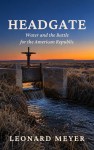
Headgate: Water and the Battle for the American Republic
In the arid West, the federal government spent a century delivering water to make land productive. In the humid East, it spent the same century removing water for the same reason. Headgate reads twelve regimes of American water management — from Hoover Dam and the Ogallala to the Mississippi levees and the Everglades reversal — as one continuous project, and argues for reform on its own terms rather than dismantling what was built for a reason that still holds.

